
Fort Walton Beach Directory Holdings
The verified historical shelf is layered rather than one continuous publisher run. The Fort Walton Beach Library confirms a long newspaper microfilm collection, while a neighboring heritage institution catalogs specific city directory volumes. Florida Memory, the clerk, and federal census schedules add other named records. Each answers a different question. An absent listing in one source is not proof that a person left town.
| Collection | Years documented | Where held | Access |
|---|---|---|---|
| Fort Walton Beach city directories | 2000–2009 and 2018 | Walton County Heritage Association library | Contact for volume access |
| Northwest Florida Daily News microfilm | 1915–August 2010 | Fort Walton Beach Library | In person |
| Okaloosa officials directory | 1915–1969 | Florida Memory | Free digital item |
| Named federal census schedules | 1920–1950 | National Archives and library databases | Online or on site |
| Historic deed indexes | 1915–July 1982 | Okaloosa County Clerk | Free index; deeds by book/page |
| Funeral-record compilation | 1927–1984 | Regional heritage catalog | Reference inquiry |
No official local catalog page proves an unbroken Polk, telephone, or criss-cross run. Ask reference staff to search each title and year. The confirmed 2000–2009 and 2018 holdings must not be stretched into a claim that every other year survives. The officials directory is not a household roll. It identifies officeholders, locality, dates, and status, which can still separate two people with the same name.
Fort Walton Beach Newspaper Names
The city directory shelf becomes more useful beside Northwest Florida Daily News microfilm. Its 1915 through August 2010 run can supply obituaries, marriage reports, society columns, school and club notices, advertisements, addresses, and legal notices. A directory gives a compact snapshot. A newspaper can explain why an address changed, identify relatives, or show that a person stayed connected after moving.
Bring the library a full name, alternate spelling, likely street, and narrow date range. Browse near a known marriage, death, sale, or permit date. Optical character recognition often misses initials and narrow columns, so issue browsing still matters. Save the masthead, date, page, and column with each clipping.
The captured image comes from the official Fort Walton Beach Library service page and shows the local access point for city directory research.
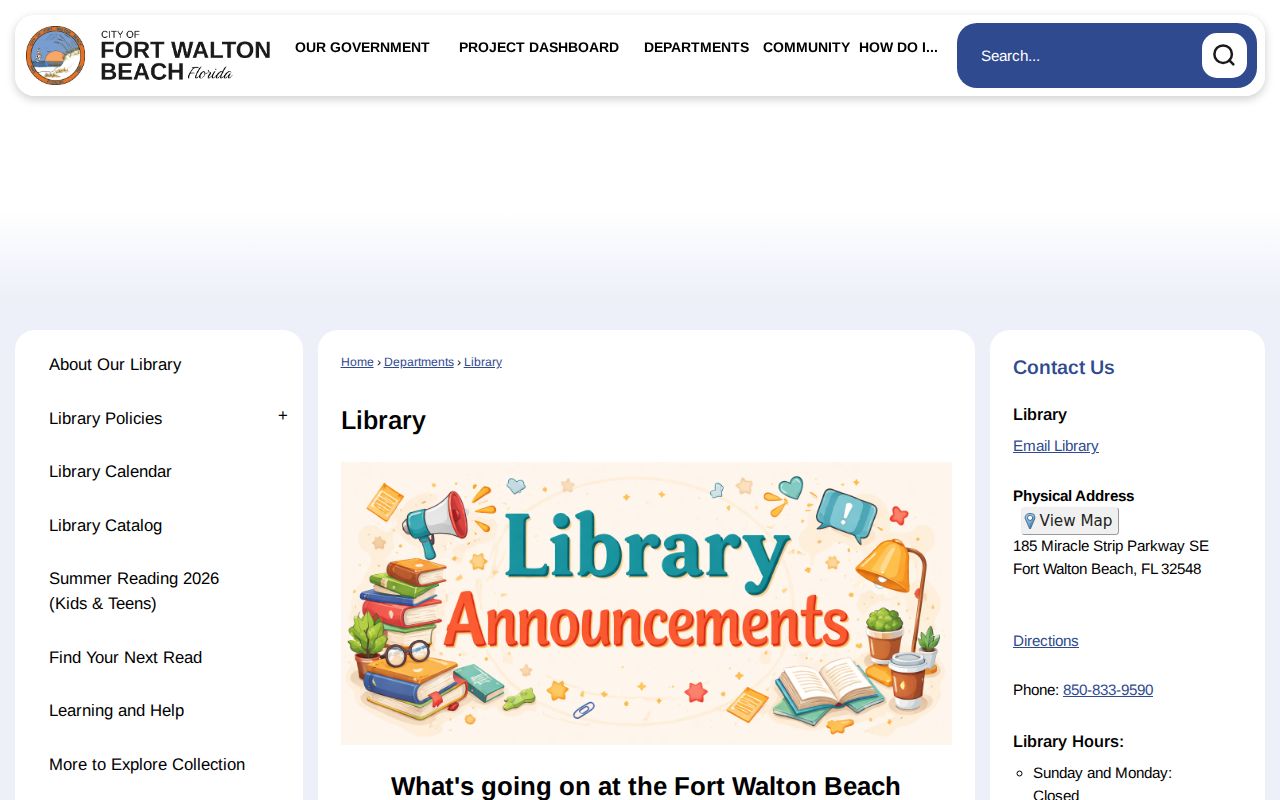
Confirm current hours and available databases before visiting because both can change.
Read Fort Walton Beach Directory Entries
First identify the volume type. An alphabetical directory starts with a surname. A reverse or criss-cross section starts with a street and lists house numbers. Telephone and business books omit many household details. Photograph the title page and publisher key before the entry because marks and short forms vary.
| Printed name | Surname, given name, or initials exactly as printed |
|---|---|
| Spouse or widow mark | A parenthesized spouse or “wid” notation, when defined |
| Work detail | Occupation, employer, or business cross-reference |
| Residence | House number, street, suffix, and sometimes phone |
| Status mark | Homeowner, renter, roomer, or vacancy only when the key says so |
- Criss-cross directory
- A section arranged by street and house number.
- Householder index
- The adults or businesses chosen by the publisher for listing.
- Abbreviation key
- The volume’s explanation of marks such as h, r, emp, and wid.
A listing is evidence of what the publisher recorded, not a full census. Children, lodgers, deployed service members, new arrivals, and people with unlisted numbers may be absent. Never turn an owner or renter mark into fact unless that volume defines it.
Search Camp Walton Directory Records
Older catalogs, maps, newspapers, and indexes may use Camp Walton, then Fort Walton, before the later Fort Walton Beach name. Search all three forms. Do not silently replace the printed name in notes. Keep the original and add a modern interpretation in a separate field.
Okaloosa County was created in 1915 from parts of Santa Rosa and Walton Counties. A family trail before that date belongs in predecessor-county records. Eglin Field and later Eglin Air Force Base, along with Hurlburt Field, drove rapid moves and short local stays. A one-year gap in a Fort Walton Beach city directory can reflect deployment, omission, or nonpublication instead of death.
Local naming key. Preserve Camp Walton, Fort Walton, directional suffixes, and the publisher’s spelling before matching a modern address.
Pair Fort Walton Beach Census Years
The National Archives census portal explains named federal schedules. The 1950 census is the newest public named census under the 72-year rule; 1960 is scheduled for release in 2032. Public 1920 through 1950 schedules can show household members, relationships, ages, birthplaces, occupations, dwelling numbers, and neighbors.
This official census image illustrates the federal route that complements a city directory entry.
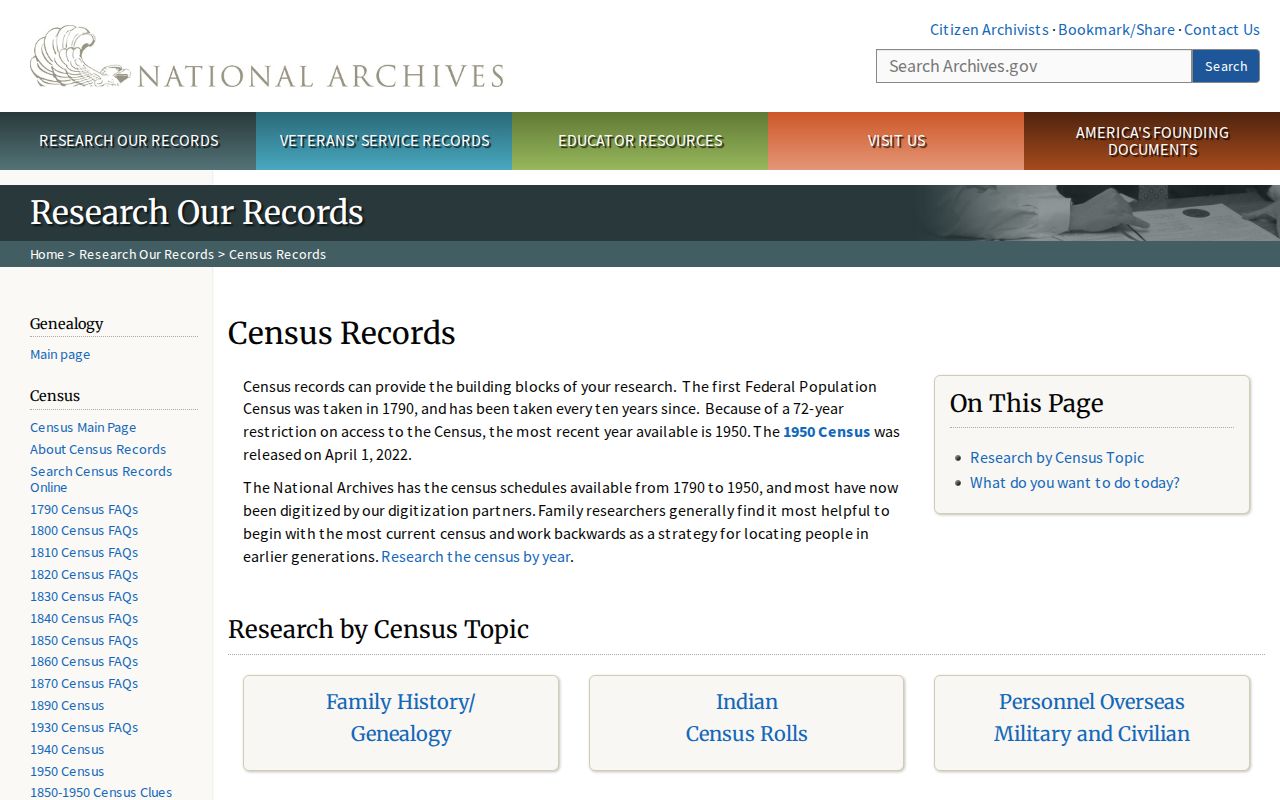
Record the enumeration district and dwelling or family number, not just the indexed name. Nearby households often resolve a same-name conflict.
- Find the person in a confirmed directory year and copy the entry exactly.
- Check each adjacent volume for spelling, spouse, work, and address changes.
- Use the street-order section, if present, to confirm the number and neighbors.
- Match the nearest public census by name, age, relatives, and location.
- Use newspaper, deed, probate, or funeral evidence to explain disappearance.
Okaloosa Directory Archives
Florida Memory’s officials directory covers 1915–1969. It records a person, office, locality, dates, and status. That helps with civic identity and same-name problems. It must never be described as a directory of all Fort Walton Beach households.
The Okaloosa Clerk supplies another bridge. Deeds, probate, marriage licenses, and court files can confirm family or property ties found in a city directory. The official clerk page shown below provides that records-office route.
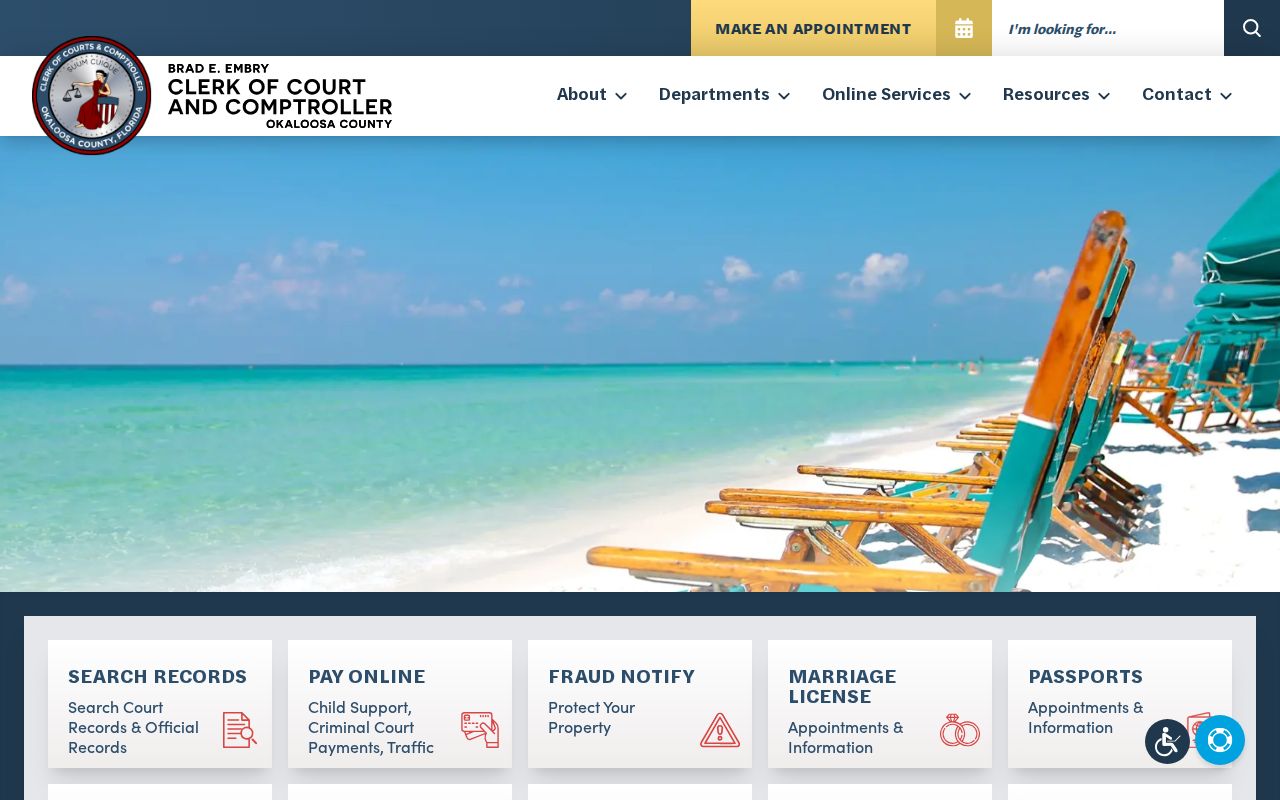
Use the Okaloosa County Clerk to choose online, counter, copy, or certification access. The nearby Fort Walton Beach annex at 1940 Lewis Turner Boulevard can be more practical than Crestview for south-county users.
Build a Fort Walton Beach Timeline
A year-by-year worksheet keeps one record from carrying too much weight. Use columns for volume year and publisher, printed name, spouse, occupation, employer, address, phone, page, and confidence. Add separate rows for census, deeds, newspapers, probate, and vital events. A city directory date is a publication snapshot, not proof that a person stayed all year.
When someone vanishes, test several explanations. Look for a deed transfer, obituary, probate file, marriage report, military move, or later listing elsewhere. Regional funeral records and genealogical society journals may add clues, but a compiled transcript should lead back to the original certificate, deed, or paper.
For a house-centered question, continue with the Fort Walton Beach previous residents trail. That method starts with today’s parcel and carries the legal description backward, while directories supply evidence about occupants between sales.
Note: A missing annual entry can mean omission, deployment, a move, or a missing volume, so confirm departure in a second source.
Access Fort Walton Beach Collections
Several access channels serve different needs. At the library counter, bring names, spelling variants, years, and streets. Ask whether the cooperative card provides on-site genealogy or newspaper databases, since subscriptions change. For microfilm, a known event date is more useful than an open surname request. Catalog searches should combine Fort Walton Beach directories, Okaloosa County genealogy, Camp Walton, a surname, school, or church.
Florida Memory item records identify creator, series, date, subject, and rights information. Search Okaloosa County and both predecessor counties. FamilySearch catalog results may require an account or affiliated-library terminal. Record access limits so another researcher knows why an image was not captured.
Historical societies may hold journals, cemetery files, funeral transcripts, and family vertical files. Ask whether access is by appointment and what copy charge applies. Okaloosa genealogy journals reach at least 1978, while a regional funeral compilation spans 1927–1984. Both are leads, not substitutes for originals.
For clerk material, the Fort Walton Beach annex provides terminal access and retrieval help. Crestview is the fallback for original microfilm, old deed books, plats, or an unreadable scan. Call 850-651-7200 for the annex or 850-689-5000 for the courthouse. Staff explain retrieval and copies, but do not make genealogy conclusions.
Verify Each City Directory Match
Common names need more than one matching fact. Compare spouse, work, street, phone, age, and relatives. A census can show neighbors later listed on the same street. A deed can place an owner on the same parcel. A newspaper can connect an initial with a spouse or business. Independent agreement is stronger than copies of one index.
Keep negative findings narrow. Write “not found in the 2004 volume searched,” not “did not live in Fort Walton Beach.” Check whether a volume covers the city, a broad exchange, or selected householders. Inspect nearby pages because an index can misread a name. Retain directional suffixes and units. Postal wording can describe land outside city limits, so it does not prove municipal residence.
Cite Fort Walton Beach Directory Pages
A complete city directory citation includes the printed title, publisher when shown, publication year, page number, section type, repository, and access date. For microfilm, add the newspaper title, issue date, page, and column. For a digital archive, record the item title and series rather than saving only a search-result link. Photograph the title page, abbreviation key, entry, and neighboring page when context matters. Keep the exact spelling in the transcription, including initials and old place names. A separate notes field can hold a modern address or corrected spelling. This distinction prevents a later interpretation from being mistaken for text printed in the original Fort Walton Beach record.