
Fort Walton Beach Address Eras
No single record names every former occupant. The best source depends on the period and whether the question concerns title, a household, construction, or an event. The current parcel card supplies the stable starting identifiers. Deeds establish owners. Directories, newspapers, and census schedules can identify previous residents, including some renters.
| Source | Years it covers | Where held | What it shows |
|---|---|---|---|
| Modern Official Records | August 1982–present | Okaloosa Clerk portal | Deed parties, dates, instruments, legal description |
| Historical deed index | 1915–July 1982 | Clerk browser and microfilm | Grantor, grantee, book, and page |
| Confirmed city directory volumes | 2000–2009, 2018 | Walton County Heritage Association | Name or address listings |
| Local newspaper microfilm | 1915–August 2010 | Fort Walton Beach Library | Sales, rentals, obituaries, legal notices |
| Named federal census | 1920–1950 | NARA and genealogy databases | Households and nearby families |
| City MGO | Current; legacy cutoff unstated | City portal or records request | Permits, inspections, code, and BTR activity |
Sanborn maps may show a footprint, street number, name, or use, but exact local sheet years were not verified. Treat them as an inquiry route, not promised coverage. Likewise, the confirmed directory years do not prove a continuous run.
Start the Fort Walton Beach Parcel
Search the Okaloosa County Property Appraiser by the exact situs address, which means the physical property address. If it fails, remove a unit or vary the directional suffix. Save the parcel number, assessed owner, mailing address, abbreviated legal description, subdivision, lot and block, sale instrument, exemptions, and building data.
A mailing address is where the tax notice goes. It may be elsewhere. Assessed ownership does not identify every occupant, and homestead is only a tax-status clue. Still, the legal description and parcel number give the previous residents search durable anchors when street wording changes.
The image below comes from the Okaloosa Clerk online services route used after the parcel card.
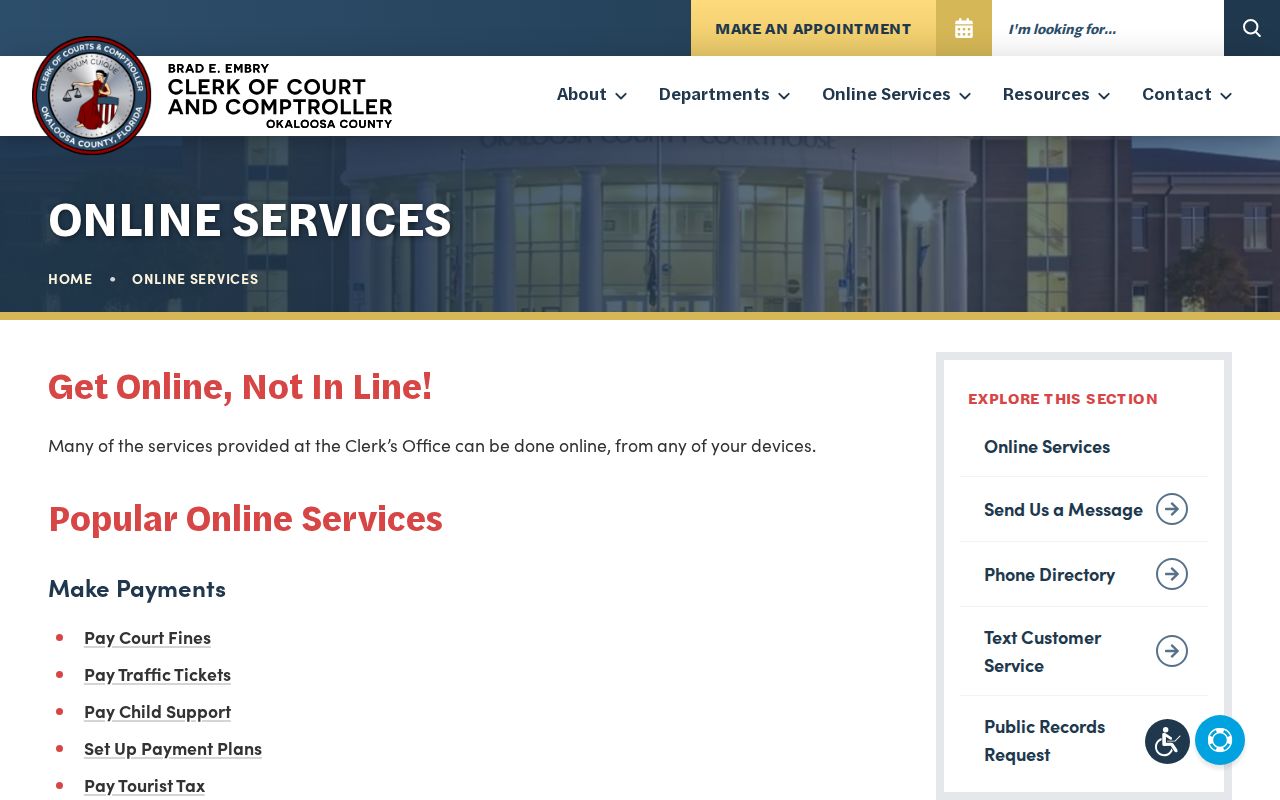
The landing page routes researchers to Official Records, court files, marriage services, tax deeds, and public-record requests.
Trace Okaloosa Previous Owners
Take the parcel card’s latest sale instrument or book and page into modern Official Records. Confirm the legal parcel. The seller on the purchase deed is the prior owner. Search that seller earlier as a grantee, the party who received property, then select the deed for the same legal description. Repeat.
- Save the current parcel card, sale reference, and full legal description.
- Open the newest acquisition deed and confirm it covers the same parcel.
- Record the grantor, the person transferring an interest, as the prior-owner lead.
- Search that grantor earlier as grantee and verify the matching lot or legal text.
- Carry book and page into the historical browser when the chain crosses July 1982.
- For land before 1915, check Walton or Santa Rosa County predecessor records.
- Grantor and grantee
- The grantor transfers an interest; the grantee receives it.
- Chain of title
- The linked sequence of instruments that transferred the same land.
- Legal description
- Subdivision, lot, block, metes, or other land text that survives address changes.
- Criss-cross directory
- A directory arranged by street and house number, useful for occupants.
A mortgage is security, not a sale. A quitclaim transfers only the interest held. Execution date and recording date are different. Check corrective deeds, trustees, personal representatives, foreclosures, tax deeds, spouse signatures, and parent-parcel splits before accepting the chain.
Cross the 1982 Deed Seam
Okaloosa’s record search splits at July and August 1982. Newer instruments use the current portal. The historical direct and indirect indexes cover 1915 through July 1982 in year bands. Choose Direct for grantors or Indirect for grantees, then select Individuals, Corporations and Firms, or the Banks section available for 1956–1973. The year bands include 1915–1938, 1939–1948, 1949–1955, 1956–1973, annual books for 1974–1981, and split 1982 periods.
Write down book and page before leaving an index image. The index is a finding aid, not the deed itself. At the Fort Walton Beach courthouse annex, 1940 Lewis Turner Boulevard, public terminals and staff can help retrieve a book/page or archived probate file. The Crestview courthouse is the fallback for original microfilm and illegible scans.
Insider check. A 2025 clerk notice says refilmed deed books may differ from original filming; ask staff to compare original microfilm before buying a questionable copy.
Match Fort Walton Beach Households
Ownership intervals create the frame, but directories and census schedules fill in people. Use the confirmed Fort Walton Beach city directory years without assuming missing years exist. A reverse section can put an occupant at a house number. An alphabetical entry may name a spouse, occupation, employer, and residence. Copy the publisher key because symbols differ.
The 1920 through 1950 public named census schedules can show full households, relationships, ages, occupations, dwelling numbers, and neighbors. The 1950 census is newest under the 72-year rule. Pair census years with newspaper microfilm and any directory years close to the ownership interval.
- Make one row for every confirmed deed-owner period.
- Add directory entries by printed year, spelling, and page.
- Add census household and enumeration details for the nearest public decade.
- Overlay newspaper, probate, marriage, death, and permit events.
- Rate each resident claim by agreement among independent sources.
Military movement around Eglin and Hurlburt makes a brief listing normal. Search Camp Walton and Fort Walton as well as Fort Walton Beach. Preserve NE, SW, unit, and subdivision terms. No verified citywide renumbering year was found, so never invent one.
Close Previous Resident Trails
Obituaries, funeral records, probate, marriage records, and death certificates can explain who left an address or connect heirs. The official Florida forms hub shown below lists current certificate applications.
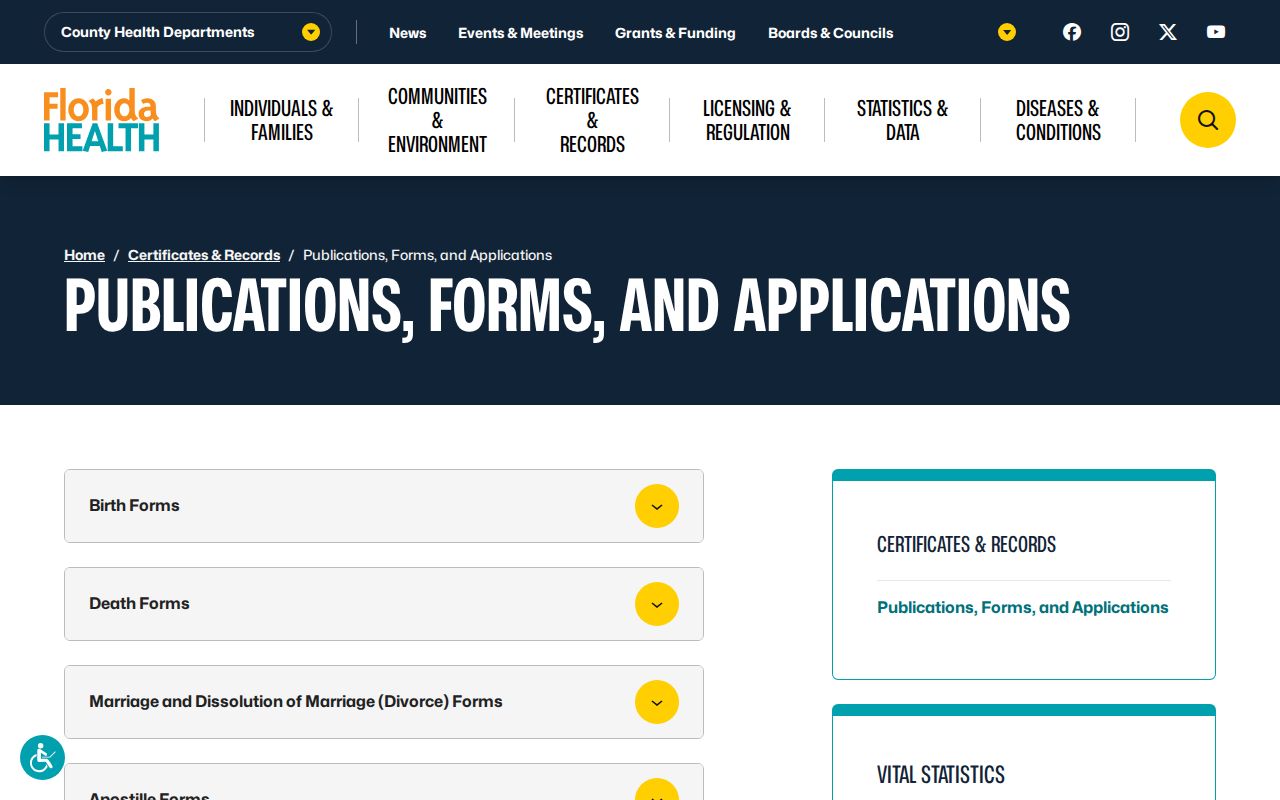
Use the Florida vital-record forms directory to choose the correct record and current order method.
Florida birth certificates under 125 years are confidential and require eligibility. Death certificates without cause are public, while cause-of-death information is restricted for 50 years. Marriage and dissolution certifications are public. The clerk records marriage licenses and holds local divorce cases. Statewide birth recording starts in 1917 with limited earlier material.
The birth-record page shown next is the official source for eligibility and application instructions.
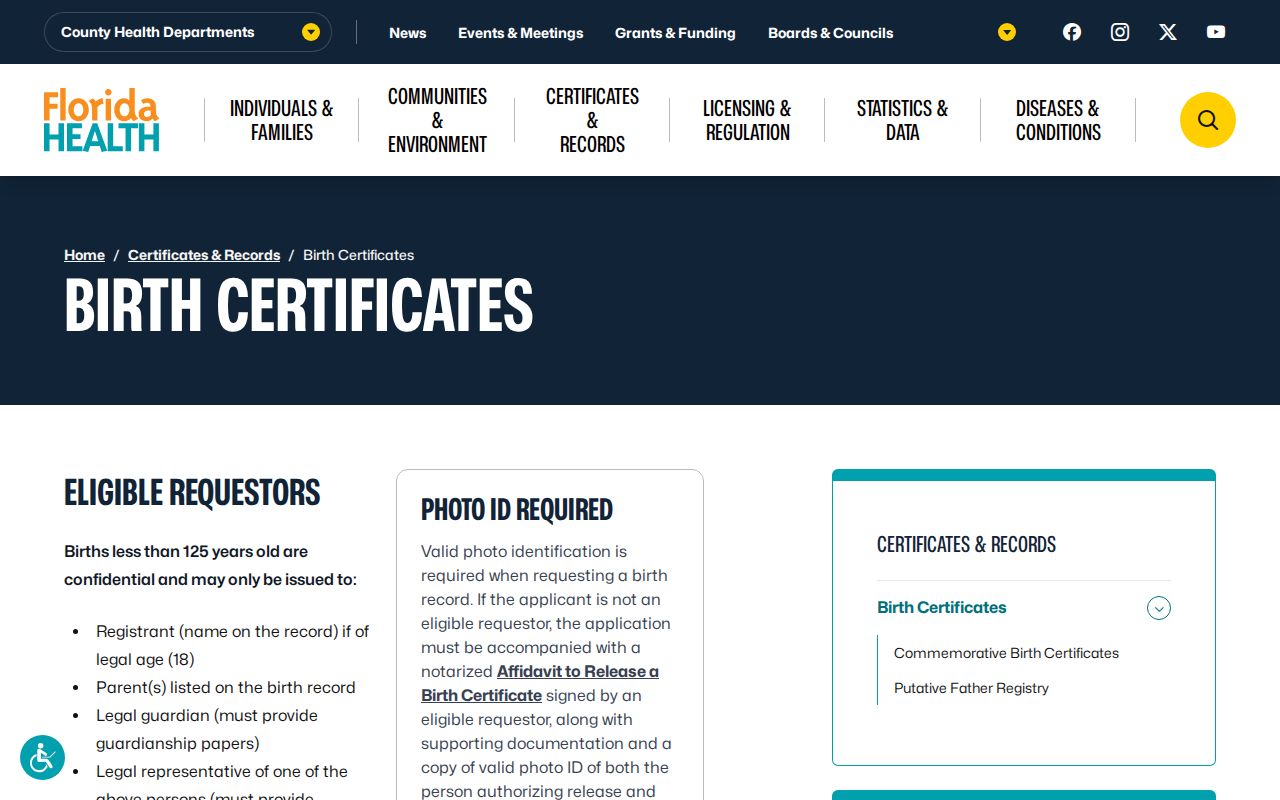
Check the Florida birth certificate rules before ordering. A directory name does not create eligibility for a confidential certificate.
Date Fort Walton Beach Property Work
The city’s MyGovernmentOnline system handles permits, inspections, planning, business tax receipts, and code cases. A permit may name an applicant or contractor and date substantial work. It does not prove the first construction date, ownership, or occupancy. A property-card year built can also be approximate after additions or storm repairs.
When a record is not exposed in MGO, send a focused Chapter 119 request through the City Clerk. Give the situs address, parcel ID, project or case type, and date range. Ask for native electronic format and a cost estimate. Inspection is generally free; ordinary statutory copies may cost 15 cents one-sided or 20 cents two-sided, while extensive staff or technical work may be charged at actual cost. Florida sets no fixed response-day deadline, but production must occur within a reasonable retrieval, review, and redaction time.
Code complaints remain allegations until an inspection or order resolves them. Report only the documented status. Keep permit and code evidence in a separate timeline row from ownership and residence.
Use Previous Residents Lawfully
House history, family history, heir research, and personal curiosity are legitimate frames. Florida records also contain lawful privacy limits. Safe at Home can substitute an address for eligible victims, and section 119.071 protects home data for specified officials and families. Sealed courts, juvenile matters, adoption, motor-vehicle data, voter identifiers, and vital records have their own limits. An absent address is not proof that a person was absent.
Lawful use. Never use previous resident records to stalk, threaten, harass, or harm anyone; Florida stalking and cyberstalking law appears at section 784.048.
Keep citations for every claim: parcel number and retrieval date, deed instrument or book/page, directory title and page, census location, newspaper date and page, permit number, or probate case. Mark inference as inference. That record trail is what turns a list of names into a defensible Fort Walton Beach address history.
Note: Owners, occupants, mail recipients, applicants, and contractors are different roles; label each person only as the source supports.
Document Every Previous Resident
Create one address-history row for each source, not one blended row for each person. Record the role as assessed owner, deed grantor, deed grantee, directory householder, census household member, permit applicant, contractor, obituary subject, or probate party. Add the exact source date, retrieval date, stable parcel or instrument number, and a confidence note. This keeps a prior owner from being mislabeled as an occupant and prevents a contractor’s business address from becoming a claimed home.
Save the parcel card and deed references before relying on portal result links, which may expire. For a historical index, capture the year band, Direct or Indirect mode, individual or corporate column, book, and page. For a directory, cite the title page, key, printed page, and street or alphabetical section. For census evidence, retain the enumeration district, dwelling number, family number, and nearby households. A newspaper citation needs title, date, page, and column.
Resolve conflicts rather than hiding them. If a directory and deed use different street numbers, compare the legal description, subdivision plat, directional suffix, and nearby names. If a permit year and property-card year built differ, label both according to their sources. Previous residents of a Fort Walton Beach address should be tied to dated evidence, while any conclusion about when they arrived or left should be clearly marked as an inference.